
- 17/07/2026
- Goodfaith Healthcare
- 0 Comments
- Blogs
How Weather Changes Trigger Flare-Ups in Chronic Conditions? Like Asthma
If you’re a parent in Hinjewadi or Wakad, you’ve probably noticed it already: the moment Pune’s weather shifts — a sudden monsoon downpour, a dusty pre-summer evening, or that first cold snap in December — your child’s cough comes back, the wheezing starts, or their asthma inhaler suddenly becomes a daily necessity again. This isn’t a coincidence. Weather changes are one of the most common and most underestimated triggers of asthma and other chronic respiratory flare-ups in children.
As a pediatrician in Hinjewadi, Dr. Anuja Pakhare sees this pattern every season — a spike in breathless, wheezy, coughing children right around Pune’s weather transitions. This guide explains Chronic Disease Management in Hinjewadi why weather affects chronic conditions like asthma, what symptoms parents should never ignore, and how you can protect your child through every season.
Why Does Weather Affect Asthma and Chronic Respiratory Conditions?
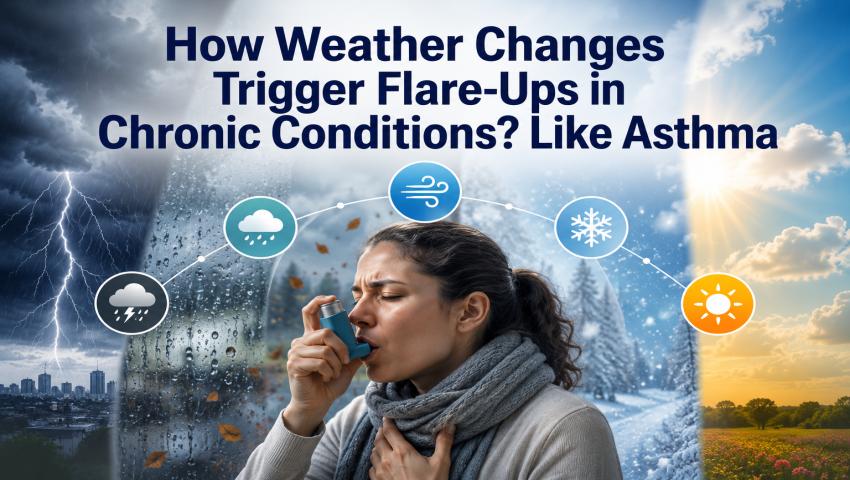
Asthma is a chronic condition in which the airways are already inflamed and sensitive. Weather doesn’t cause asthma, but it acts as a trigger that tips already-sensitive airways into a flare-up. Here’s how different weather conditions affect breathing:
- Cold air narrows and irritates the airways almost instantly. This is why children often start coughing or wheezing the moment the temperature drops in the evenings, especially during Pune’s short but sharp winter.
- Humid, moist air — common during Pune’s monsoon — makes the air feel heavier and harder to breathe. High humidity also creates the perfect breeding ground for mold, dust mites, and fungal spores, all of which are common asthma triggers.
- Sudden temperature swings, like a hot afternoon followed by a cool, damp evening (a very typical Hinjewadi–Wakad pattern), stress the airways as they constantly try to adjust.
- Dry, dusty air, especially before the monsoon breaks, dries out the mucous membranes lining the airways, making them more vulnerable to irritation and infection.
- Air pollution and pollen tend to spike during weather transitions. Stagnant air traps pollutants close to the ground, and rising pollen counts during seasonal changes are a well-documented asthma trigger.
Because children’s airways are smaller and still developing, they feel the effects of these changes faster and more intensely than adults — which is exactly why timely care from a Child Specialist in Hinjewadi makes such a difference.
Signs Your Child's Asthma Is Flaring Up:
Parents often search “why does my child cough more at night” or “why does my child wheeze when weather changes” — here’s what to watch for:
- Wheezing or a whistling sound while breathing
- Persistent cough, especially at night or early morning
- Shortness of breath or rapid breathing
- Chest tightness or a child complaining their chest “hurts” when breathing
- Fatigue or reduced activity because breathing feels effortful
- Increased use of a rescue inhaler
If you notice these signs repeating every time the weather shifts, it’s time to consult a pediatrician in Wakad or Hinjewadi rather than simply waiting it out.
Weather-Related Triggers Specific to Pune's Seasons:
- Monsoon (June–September): High humidity plus indoor dampness leads to mold growth, dust mite proliferation, and viral infections — all major asthma triggers. This is also the peak season for respiratory viral illnesses in children, which is why prompt Viral Infection Treatment in Hinjewadi matters during these months.
- Winter (November–January): Cold, dry evenings constrict airways quickly. Children who are fine all day often start coughing or wheezing after sunset.
- Pre-monsoon and summer (March–May): Dust, rising pollution, and pollen combine with dry heat to irritate already-sensitive airways.
Who Is Most Vulnerable to Weather-Triggered Flare-Ups?
While any child with asthma can be affected, certain children need closer monitoring:
- Infants and newborns, whose airways are extremely small and reactive — which is why Follow up of High Risk Newborns in Hinjewadi is so important for babies born preterm or with early respiratory issues
- Children who didn’t get thorough Newborn Screenings at a trusted Newborn Screenings Centre in Hinjewadi
- Children with a family history of asthma, eczema, or allergies
- Children with recurring chest infections or bronchiolitis as infants
- Adolescents managing their own asthma without full awareness of their triggers — an area where Adolescent counseling in Hinjewadi can help teens learn to recognize early warning signs and use inhalers correctly
Even babies who were exclusively breastfed tend to have stronger immunity against respiratory infections, which is one reason Dr. Anuja Pakhare encourages Breastfeeding counseling in Hinjewadi for new mothers — good early nutrition genuinely supports a child’s long-term respiratory resilience.
How Weather-Triggered Flare-Ups Are Treated?
When a child comes in wheezing or breathless during a weather transition, the first priority is opening up the airways quickly and safely. At Goodfaith Healthcare Clinic, Nebulisation Treatment in Hinjewadi is available for exactly this situation — delivering fast-acting medication directly to the lungs to relieve wheezing and breathlessness during an acute flare-up.
For children with recurring or long-term asthma, Chronic Disease Management in Hinjewadi goes beyond treating one episode. It means building a personalized asthma action plan, identifying your child’s specific triggers, adjusting medication doses as the seasons change, and tracking lung function over time so flare-ups become less frequent and less severe.
Practical Tips for Parents to Prevent Weather-Triggered Flare-Ups:
- Track the forecast, not just the temperature. Check humidity and air quality index (AQI), not just whether it’s hot or cold.
- Keep rescue inhalers accessible, especially during monsoon and winter evenings.
- Use a light scarf or mask to warm the air your child breathes in on cold mornings and evenings.
- Reduce indoor dampness during monsoon — use dehumidifiers or keep rooms well-ventilated to prevent mold.
- Stick to the vaccination schedule. Flu and pneumococcal vaccines significantly lower the risk of respiratory infections that can worsen asthma. Parents searching for the Best Vaccination Center Hinjewadi or a reliable Vaccination Center in Wakad can get both routine childhood immunisations and seasonal flu shots in one visit.
- Don’t skip regular check-ups. A seasonal Routine Health Check-ups service in Hinjewadi helps catch early signs of poorly controlled asthma before a full flare-up develops.
- Involve the whole family. If a parent or grandparent also has breathing difficulty during weather changes, a General Physician in Wakad or General Physician in Hinjewadi can evaluate and manage adult respiratory symptoms alongside your child’s care.
When to See a Doctor Immediately?
Book an appointment or visit the clinic without delay if your child has:
- Breathing that is visibly fast, laboured, or accompanied by chest indrawing
- Lips or fingertips turning bluish
- Difficulty speaking in full sentences due to breathlessness
- No relief from the rescue inhaler within the usual time
- Wheezing that worsens over hours rather than settling
Why Parents in Hinjewadi and Wakad Trust Dr. Anuja Pakhare?
Searching for a “pediatrician near me” who genuinely understands how Pune’s weather affects children isn’t easy — but that’s exactly the gap Goodfaith Healthcare Clinic fills. As an experienced Family Physician in Hinjewadi, Dr. Anuja Pakhare offers complete, continuous care — from Early pregnancy evaluation and management in Hinjewadi for expecting mothers, through newborn screening and high-risk newborn follow-up, to ongoing asthma and chronic disease management as your child grows.
Located on Hinjewadi–Wakad Road, Goodfaith Healthcare Clinic functions as a full-service Pediatric Clinic in Hinjewadi and Child Clinic in Hinjewadi, equipped for on-the-spot nebulisation, vaccination, and chronic condition monitoring — so you’re not scrambling to find care mid-flare-up.
Frequently Asked Questions:
Weather doesn’t cause asthma — it triggers flare-ups in airways that are already sensitive.
Cooler night air and mucus pooling while lying down make sensitive airways more reactive after dark.
Yes, it’s safe for quick relief, but frequency and dosage should always be set by your doctor, not repeated on your own.
Fast or laboured breathing, no relief from the inhaler, or trouble speaking means urgent care. Mild, recurring symptoms call for a routine check-up.
Conclusion:
Pune’s weather doesn’t stay the same for long, and neither does your child’s asthma risk. Recognising the pattern — cold evenings, humid mornings, dusty pre-monsoon days — is the first step to staying ahead of flare-ups instead of reacting to them. With the right care plan, timely vaccinations, and quick access to treatment when needed, most weather-triggered flare-ups can be managed calmly and confidently. If your child’s symptoms tend to flare with the seasons, Dr. Anuja Pakhare at Goodfaith Healthcare Hinjewadi–Wakad Road, is here to help you build that plan.