
- 22/05/2026
- Goodfaith Healthcare
- 0 Comments
- Blogs
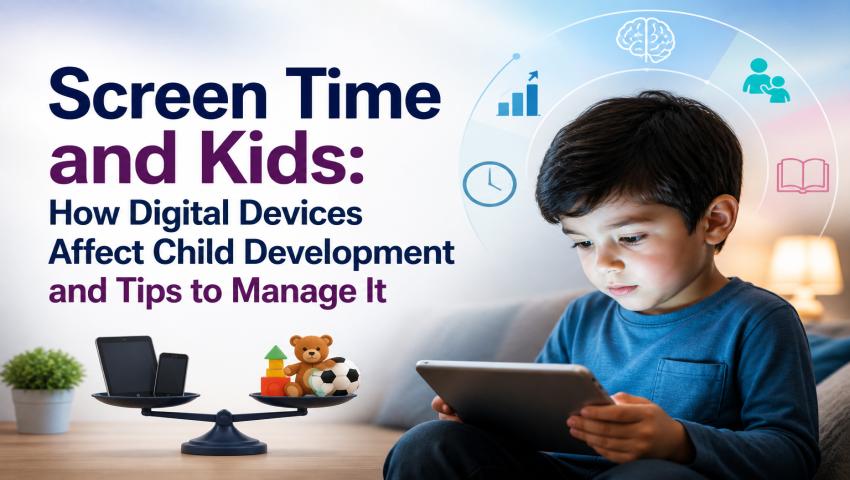
Screen Time and Kids: How Digital Devices Affect Child Development and Tips to Manage It?
In today’s digital age, screens are everywhere—from smartphones and tablets to TVs and laptops. While these devices are great tools for learning and entertainment, excessive screen time can have a significant impact on a child’s physical, mental, and emotional growth.
As parents, finding the right balance between technology and real-world experiences can be challenging. Let’s explore how digital devices affect child development and look at some practical ways to manage screen time effectively.
How Excessive Screen Time Affects Child Development?
- Delayed Language and Social Skills: Children learn to speak and communicate by interacting with the people around them. When toddlers spend too much time watching videos instead of talking with parents or playing with peers, it can delay their language development and affect their social-emotional skills.
- Reduced Physical Activity & Health Risks: Hours spent sitting with a device mean less time running, jumping, and playing outdoors. This sedentary lifestyle is a leading cause of childhood obesity, poor posture, and weakened eyesight (often leading to early eye strain or dryness).
- Poor Sleep Quality: The blue light emitted by screens suppresses the production of melatonin, a hormone necessary for sleep. Using devices right before bedtime can make it difficult for children to fall asleep, leading to daytime tiredness, irritability, and lack of focus.
- Shorter Attention Span & Behavior Issues: Fast-paced digital content provides instant gratification. Children exposed to excessive screen time may find it hard to focus on slower, real-world tasks like reading a book, solving puzzles, or listening to a teacher, which can sometimes trigger tantrums and behavioral challenges.
How Much Screen Time is Safe? (Recommended Guidelines)
According to leading pediatric associations, the recommended daily screen time limits are:
- Under 18 Months: No screen time at all (except for occasional video calls with family).
- 18 to 24 Months: Very limited high-quality educational content, always watched together with a parent.
- 2 to 5 Years: Non-educational screen time should be limited to a maximum of 1 hour per day.
- 6 Years and Older: Consistent limits should be placed, ensuring screens do not interfere with sleep, physical activity, and social interactions.
Practical Tips for Parents to Manage Screen Time:
1. Establish “Screen-Free Zones and Times”: Make certain areas of the house and specific times of day entirely device-free. For example:
- No screens during family meals.
- No screens in bedrooms.
- The “1-Hour Before Bed” Rule: Turn off all digital devices at least one hour before bedtime to ensure a good night’s sleep.
2. Be a Role Model: Children mimic what they see. If they see you constantly scrolling through your phone, they will want to do the same. Set a good example by putting your phone away during family conversations and dedicated playtime.
3. Encourage “Green Time” Over “Screen Time”: Replace digital entertainment with outdoor physical activities. Encourage your children to play in the park, ride a bicycle, join a sport, or engage in creative hobbies like drawing, painting, and reading blocks.
4. Co-view and Co-play: When your child does use a screen, try to watch it with them. Ask questions about the show, discuss the characters, and turn it into an interactive and educational experience rather than a passive habit.
5. Choose Quality Over Quantity: Not all screen time is bad. If they are watching a screen, guide them toward age-appropriate educational games, interactive puzzles, and creative content that helps them learn new skills rather than mindless scrolling.
Conclusion:
Technology is here to stay, and it is a valuable part of our world. However, moderation is the key. By setting healthy boundaries today, you can protect your child’s developing brain and help them grow into healthy, active, and well-rounded individuals.
If you are concerned about your child’s developmental milestones, speech delays, or behavioral changes related to screen habits, feel free to visit us at Goodfaith Healthcare. Our expert pediatricians are always here to guide you and provide the best care for your little one.