
- 20/04/2026
- Goodfaith Healthcare
- 0 Comments
- Blogs
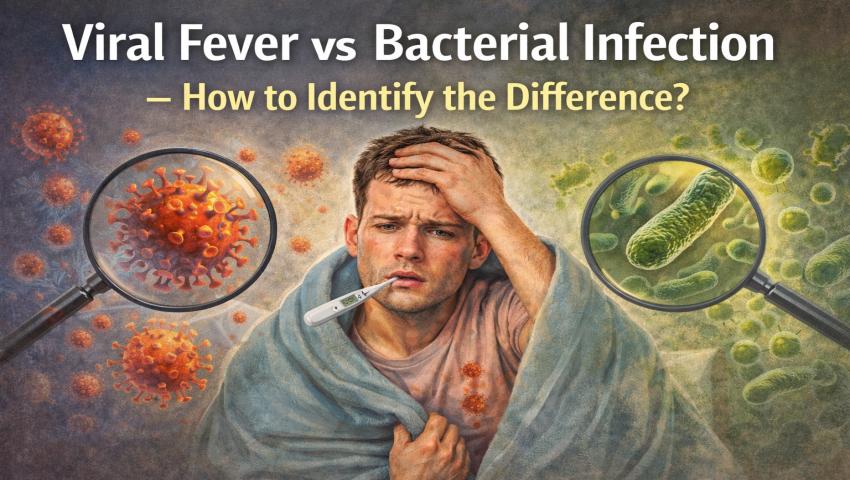
Viral Fever vs Bacterial Infection – How to Identify the Difference?
Fever is one of the most common reasons people visit a doctor. But many patients often ask:
“Is this a viral fever or a bacterial infection?”
Understanding the Confused whether it’s a viral fever vs bacterial infection? Learn the key symptoms, differences, and when to seek medical care for faster recovery. difference is important because treatment, recovery time, and medications are completely different.
What is a Viral Fever?
A viral fever is caused by viruses that spread easily from person to person, especially during seasonal changes.
Common Symptoms:
- Mild to moderate fever (100–102°F)
- Body aches and weakness
- Cold, cough, or sore throat
- Headache
- Sometimes loose motions
👉 Viral infections usually resolve on their own within 3–5 days with rest and supportive care.
What is a Bacterial Infection?
Bacterial infections are caused by harmful bacteria and may affect specific parts of the body like the throat, lungs, or urinary tract.
Common Symptoms:
- High fever (often above 102°F)
- Persistent or worsening symptoms
- Localized pain (ear pain, throat pain, chest pain, etc.)
- Pus formation (in throat, urine, or wounds)
- Severe fatigue
👉 These infections often require antibiotics prescribed by a doctor.
Key Differences Between Viral Fever vs Bacterial Infection:
When Should You See a Doctor?
Do not ignore fever if you have:
- Fever lasting more than 3 days
- Very high temperature (above 103°F)
- Difficulty breathing
- Severe weakness or dehydration
- Repeated vomiting or loose motions
- Fever in children or elderly
👉 Early diagnosis helps prevent complications.
Why You Should Avoid Self-Medication?
Many people take antibiotics without consulting a doctor. This is risky because:
- Antibiotics do not work on viral infections
- Misuse can lead to antibiotic resistance
- It may delay correct treatment
Always consult a qualified doctor before starting any medication.
How a Doctor Confirms the Diagnosis?
A general physician may:
- Check your symptoms and medical history
- Perform a physical examination
- Recommend basic blood tests if needed
This helps in deciding whether it is viral or bacterial.
Simple Tips for Faster Recovery:
- Take adequate rest
- Drink plenty of fluids
- Eat light, nutritious food
- Avoid cold or junk food
- Follow your doctor's advice strictly
Conclusion:
While viral fever is usually mild and self-limiting, bacterial infections can become serious if not treated properly.
Knowing the difference can help you take the right action at the right time.
If you are experiencing persistent fever or unusual symptoms, it’s always better to consult a doctor instead of guessing.