
- 07/10/2026
- Goodfaith Healthcare
- 0 Comments
- Blogs
Hand,Foot and Mouth Disease in Children: Symptoms, Treatment and Prevention
Seeing red spots or small blisters on your child can worry any parent. Hand, Foot, and Mouth Disease (HFMD) is a common viral infection that spreads quickly among young children, especially in daycares and primary schools. If you notice these symptoms, consulting an experienced pediatrician in Hinjewadi can help you get a clear diagnosis and guidance.
While it can look scary, HFMD is usually a mild illness. It goes away on its own with good rest and care. Knowing about hand, foot, and mouth disease in children treatment, symptoms, and prevention helps you care for your child safely at home.
What Is Hand, Foot and Mouth Disease in Children?
Hand, Foot, and Mouth Disease is an illness caused by a virus. It mainly affects children under 5 years of age, but older children and adults can get it too. Parents visiting a child clinic in Hinjewadi often seek clarity when these sudden outbreaks occur in daycare settings.
It causes fever, painful sores in the mouth, and skin rashes on the hands, feet, and diaper area. It is uncomfortable, but it is not dangerous in most cases. Most children feel better within 7 to 10 days.
Symptoms of Hand, Foot and Mouth Disease in Children:
Signs of this illness usually start 3 to 6 days after exposure. Early signs feel like a regular cold before the rash shows up.
Look out for these signs:
- Fever and sore throat: Mild fever is often the first sign, along with fussiness and loss of appetite.
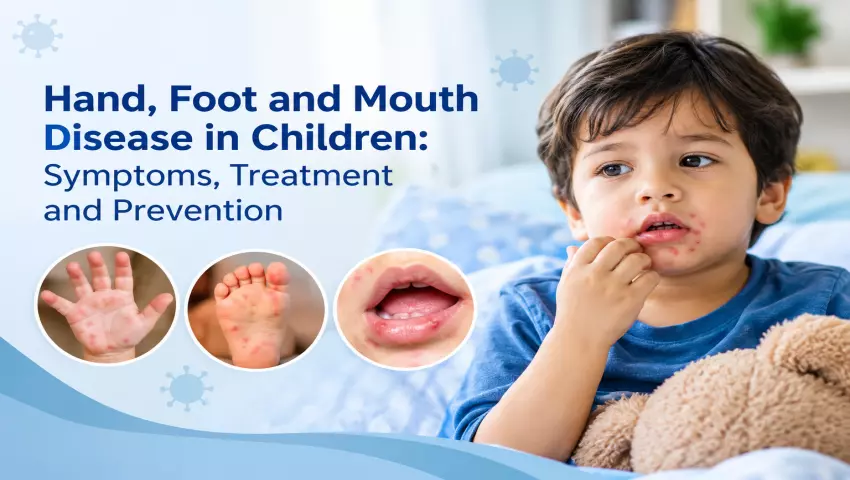
- Painful mouth sores: Small red spots appear in the mouth, on the tongue, and inside cheeks. These quickly turn into painful sores.
- Skin rash and blisters: Red spots appear on the palms, soles of the feet, and buttocks.
- Itchiness and discomfort: An itchy rash from hand, foot and mouth disease in children can make the child cranky and uncomfortable.
- Drooling and refusal to eat: Eating hurts because of mouth sores, so children may drool more and avoid food or drinks.
What Causes Hand, Foot and Mouth Disease?
Knowing what causes hand, foot and mouth disease in children helps you stop its spread at home.
This illness is caused by a hand, foot and mouth disease virus (most commonly Coxsackievirus). The virus lives in bodily fluids and spreads easily from one child to another.
It spreads through:
- Coughing and sneezing: Droplets in the air.
- Direct contact: Touching fluid from blisters or saliva.
- Unwashed hands: Especially after changing diapers or using the toilet.
- Shared items: Touching dirty toys, door handles, or utensils.
Treatment and Home Care for Hand, Foot and Mouth Disease:
There is no specific antibiotic or special medicine for HFMD because it is caused by a virus. Hand, foot and mouth disease in children treatment focuses on relieving pain and keeping the child hydrated.
Simple Home Care Tips:
- Fever and pain medicine: Give paracetamol as advised by your doctor to reduce fever and pain. Never give aspirin to children.
- Give plenty of fluids: Offer small sips of cool water, tender coconut water, or cold milk. Avoid sour or spicy juices. If your child has underlying breathing difficulty or congestion, supportive options like nebulisation treatment in Hinjewadi may be advised by your doctor.
- Soothe skin: Apply calamine lotion on the rash to reduce itching.
- Soft foods: Give easy-to-swallow foods like curd rice, khichdi, porridge, and yogurt.
- Rest: Make sure your child gets plenty of sleep to recover faster.
Dr. Anuja Pakhare, MBBS, DCH, DNB (Pediatrics), PGD (Family Medicine), is a Consultant Pediatrician and Family Physician with 15+ years of experience in newborn, child, and adolescent care. Her expertise includes general pediatric care, newborn and high-risk infant care, growth and development assessment, vaccination, nutrition counselling, and management of common childhood illnesses. At GoodFaith Healthcare, Hinjewadi, she provides comprehensive pediatric care with a focus on accurate evaluation, personalised treatment, preventive healthcare, and parent guidance. The clinic also offers services such as newborn screening, high-risk infant follow-ups, nebulization, vaccination, and growth and development assessment.
According to Dr. Anuja Pakhare: “Keeping the child hydrated is the most important step. Mouth sores make it painful to drink, which can lead to dehydration if left unmanaged.”
If you need general health advice for older family members alongside child care, consulting a general physician in Hinjewadi or a trusted family physician in Hinjewadi ensures complete care for the whole household.
How to Prevent Hand, Foot and Mouth Disease?
Good basic hygiene is the best way to guard your family against this infection.
- Wash hands often: Teach children to wash hands with soap and water for 20 seconds, especially after using the toilet and before eating.
- Clean toys and surfaces: Regularly clean items your child touches often, like toys and door handles.
- Do not share personal items: Avoid sharing cups, spoons, towels, or blankets during an infection.
- Keep sick children at home: Stop the spread by keeping your child away from school until they fully heal.
Is There a Vaccine?
Parents often ask about a hand, foot and mouth disease in children vaccine. Currently, a universal hand, foot and mouth disease vaccine for children is not available in standard immunization schedules in India. Daily hand hygiene remains the best protection. For other routine immunizations, you can visit a vaccination center in Hinjewadi or a vaccination center in Wakad.
How Long Does Hand, Foot and Mouth Disease Last?
The overall duration of hand, foot, and mouth disease in children is usually 7 to 10 days.
- Days 1–2: Fever and sore throat start.
- Days 3–5: Mouth sores and skin rash appear.
- Days 6–10: Blisters dry out, fever stops, and skin begins to heal completely.
When Should Parents Consult a Pediatrician?
While HFMD usually goes away on its own, watch for warning signs that need quick medical attention. You can visit a trusted pediatric clinic in Hinjewadi for prompt evaluation.
Call your doctor immediately if your child:
- Refuses to drink any fluids or shows signs of dehydration (dry mouth, no tears when crying, or no wet diaper for 6 hours).
- Has a high fever lasting more than 3 days.
- Appears unusually sleepy, weak, or confused.
- Complains of severe headache or stiff neck.
- Has red, swollen skin around blisters that looks infected or oozes pus.
Families residing in nearby localities can also consult a pediatrician in Wakad or a child specialist in Hinjewadi for guidance on infection control and care.
Conclusion:
Hand, Foot, and Mouth Disease can make children uncomfortable, but it passes quickly with simple home care, proper hydration, and good handwashing. For expert medical advice and personalized pediatric care, contact us to consult Dr. Anuja Pakhare, or visit GoodFaith Healthcare, Hinjewadi for a complete consultation.
FAQs About Hand, Foot and Mouth Disease in Children:
Yes. HFMD is caused by different strains of viruses. Getting infected once gives immunity to that specific virus, but your child can catch it again from a different strain. For comprehensive guidance on childhood immunity and recovery, consulting a general physician in Wakad can help address family health queries.
Yes. Adults can catch it, but it happens less often because adults usually have stronger immunity. When adults get it, symptoms are generally mild.
Your child can return to school once they have no fever for 24 hours (without medicine) and all skin blisters have completely dried up.
Yes. A gentle, warm water bath keeps the skin clean and reduces itching. Gently pat the skin dry with a towel instead of rubbing.
Avoid spicy, salty, or sour foods (like lemons or tomatoes). These foods sting mouth sores and cause burning pain. Stick to soft, cool, and bland foods. If nursing an infant with mouth sores is difficult, getting breastfeeding counseling in Hinjewadi can help mothers maintain feeding comfortably.
Infants require extra monitoring for feeding and hydration. Clinics offering follow-up for high-risk newborns in Hinjewadi and specialized care at a newborn screening centre in Hinjewadi ensure early safety for babies. For older kids, guidance such as adolescent counseling in Hinjewadi helps manage health and hygiene routines effectively.